

Introduction
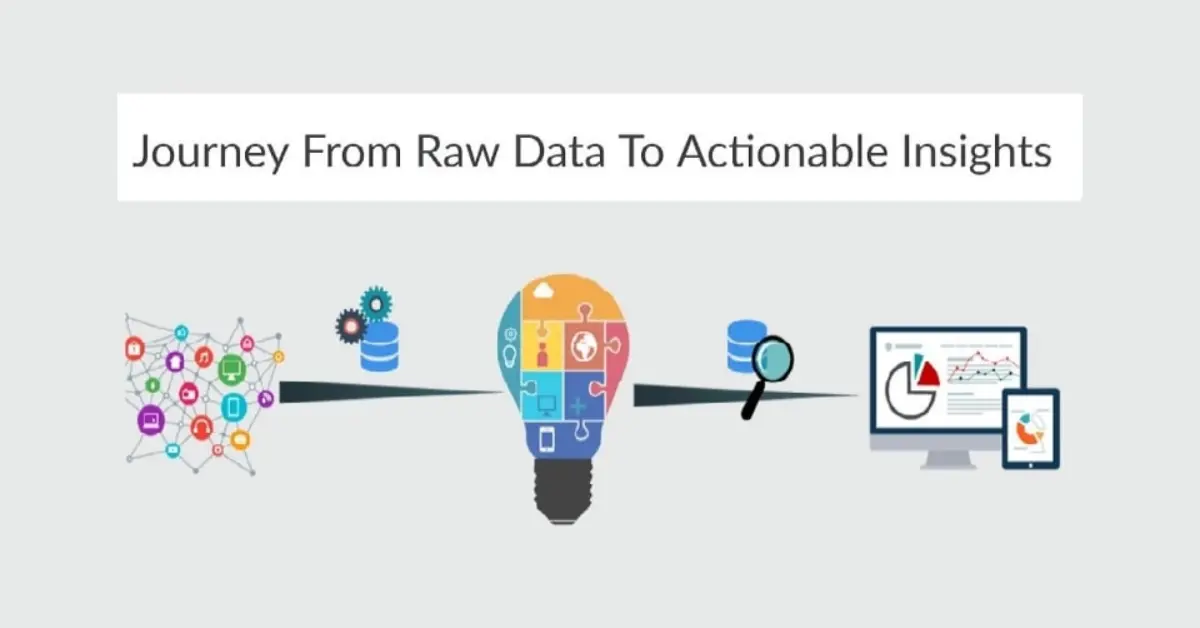
Turn Raw Data into Actionable Decisions ,In today’s digital world, businesses are generating more data than ever before—but most of it goes unused. Many organizations collect massive amounts of information yet struggle to extract meaningful data insights that actually drive results. Without the right approach, raw data remains just numbers on a screen instead of a powerful tool for growth.
The real challenge isn’t collecting data—it’s knowing how to turn data into insights that can guide smarter strategies. This is where data-driven decision making becomes essential. Companies that rely on data rather than guesswork are better equipped to identify opportunities, reduce risks, and improve overall performance.
In this guide, you’ll learn a step-by-step process to transform raw information into actionable insights using proven data analysis techniques. Whether you’re a small business owner or part of a large organization, understanding how to apply business data analytics can help you make informed decisions that lead to measurable success.
By the end, you’ll have a clear roadmap to convert your data into a strategic asset—fueling growth, improving efficiency, and giving you a competitive edge in today’s data-driven landscape.
What Are Data Insights and Why Do They Matter?
Data insights go beyond raw numbers—they are the meaningful interpretations and patterns extracted from data that help businesses understand what is happening and why. Instead of just looking at figures, insights provide context, direction, and clarity for decision-making.
To understand this better, it’s important to distinguish between data, information, and insights. Data is raw, unprocessed facts (like sales numbers or website visits). Information is organized data that answers basic questions (such as monthly sales reports). Insights, however, are deeper conclusions drawn from that information—like identifying why sales dropped or which strategy can improve performance.
In modern businesses, generating accurate data insights is essential for staying competitive. Companies rely on business data analytics to analyze trends, predict outcomes, and uncover opportunities. These insights enable smarter strategies, improved customer experiences, and more effective data-driven decision making, turning data into a powerful asset rather than unused potential.
The Importance of Data-Driven Decision Making
Relying on intuition alone can be risky in today’s competitive environment. While experience and instinct have value, they are often influenced by bias, incomplete information, or assumptions. This is where data-driven decision making becomes critical, as it allows businesses to base their choices on facts, patterns, and measurable evidence rather than guesswork.
One of the biggest advantages is reduced risk. When decisions are backed by data, businesses can identify potential problems early and avoid costly mistakes. It also enables faster decisions, since accurate data provides clear direction without prolonged uncertainty. Additionally, outcomes become measurable, making it easier to track performance and improve strategies over time.
For example, companies use customer data to personalize marketing campaigns, retailers forecast demand using sales trends, and startups analyze user behavior to improve products. These practical applications show how data-driven decision making helps organizations stay efficient, competitive, and growth-focused.
Types of Data Used in Business Analytics
Understanding different types of data is essential for effective business data analytics, as each type serves a unique purpose in generating meaningful data insights.
Structured vs Unstructured Data:
Structured data is highly organized and easy to analyze, typically stored in databases—such as sales figures, customer records, or transaction histories. Unstructured data, on the other hand, includes emails, social media posts, videos, and images. While harder to process, unstructured data provides deeper context about customer behavior and sentiment.
Qualitative vs Quantitative Data:
Quantitative data is numerical and measurable, such as revenue, website traffic, or conversion rates. It helps track performance and identify trends. Qualitative data is descriptive and focuses on opinions, feedback, or experiences—like customer reviews or survey responses—offering insight into the “why” behind the numbers.
Internal vs External Data:
Internal data comes from within the organization, such as CRM systems, financial reports, or operational metrics. External data is gathered from outside sources, including market trends, competitor analysis, or industry reports.
Using the right mix of these data types allows businesses to uncover insights, improve strategies, and make smarter decisions.
You May Also Like This:
- Article Tracking for Editors
- Modern Tracking Setup Guide
- Data Insights Explained
- What Are Data Insights?
- Data Insights Overview (HPE)
Step-by-Step Process to Turn Data into Insights
1. Define Clear Business Objectives
Every successful analysis starts with a clear goal. Ask yourself: what problem are you trying to solve? Whether it’s improving sales, reducing costs, or understanding customer behavior, having a defined objective ensures your efforts stay focused and relevant.
2. Collect Relevant Data
Not all data is useful. Avoid data overload by gathering only what directly supports your objective. Focus on quality over quantity—accurate and relevant data is far more valuable than large volumes of unnecessary information.
3. Clean and Prepare the Data
Raw data often contains errors, duplicates, or missing values. Cleaning the data ensures accuracy and reliability. This step is critical because poor-quality data can lead to misleading conclusions and bad decisions.
4. Apply Data Analysis Techniques
Once your data is ready, apply the right data analysis techniques. Descriptive analysis explains what happened, diagnostic analysis uncovers why it happened, predictive analysis forecasts future outcomes, and prescriptive analysis suggests the best course of action.
5. Interpret the Results
After analysis, focus on identifying patterns, trends, and anomalies. This step helps you understand what the data is actually telling you beyond the numbers.
6. Turn Data into Insights
Now it’s time to turn data into insights by translating your findings into meaningful conclusions. This is where raw analysis becomes valuable knowledge that can guide decisions.
7. Take Action Based on Insights
Finally, use a decision-making framework to act on your insights. Prioritize actions based on impact and feasibility, ensuring your data leads to real business outcomes.
Best Data Analysis Techniques for Businesses
Choosing the right data analysis techniques is key to extracting valuable insights from your data. Each method serves a specific purpose depending on your business goals.
Regression analysis helps identify relationships between variables, making it ideal for forecasting sales or understanding factors that influence performance. Trend analysis focuses on patterns over time, allowing businesses to track growth, seasonal changes, or market shifts.
Data visualization transforms complex data into charts and graphs, making it easier to interpret and communicate insights to stakeholders. It’s especially useful when presenting findings or spotting patterns quickly.
A/B testing compares two versions of a strategy—such as a webpage or ad—to determine which performs better. This technique is commonly used in marketing and product optimization.
Using these data analysis techniques enables businesses to make smarter, evidence-based decisions.
Tools for Business Data Analytics
Using the right tools is essential for effective business data analytics, as they help transform raw data into meaningful insights.
Spreadsheets (Excel, Google Sheets) are ideal for small to medium datasets, basic calculations, and quick analysis. They are user-friendly and widely accessible, making them a great starting point for businesses with simple data needs.
BI tools (Power BI, Tableau) are more advanced and designed for handling large datasets. They offer interactive dashboards, real-time reporting, and powerful visualization features, making them perfect for deeper analysis and data-driven presentations.
Analytics platforms—such as web or customer analytics tools—are used to track user behavior, monitor performance, and generate automated reports. These platforms are especially useful for marketing, sales, and customer experience optimization.
Choosing the right tool depends on your data size, complexity, and business goals. Combining these tools allows organizations to maximize the value of their data and improve decision-making.
Common Challenges in Turning Data into Insights

Many businesses struggle to generate meaningful insights due to common obstacles. Poor data quality—such as missing, outdated, or inaccurate data—can lead to unreliable conclusions. The solution is to implement proper data cleaning and validation processes.
A lack of skills is another major challenge, as teams may not have the expertise to analyze data effectively. Investing in training or hiring skilled analysts can help overcome this gap.
Having too much data can also be overwhelming, making it difficult to focus on what truly matters. Businesses should prioritize relevant data aligned with their goals.
Finally, misinterpretation of data can result in poor decisions. Using clear frameworks and visualization tools helps ensure accurate understanding and better outcomes.
Real-World Examples of Turning Raw Data into Actionable Decisions
Marketing optimization:
Businesses analyze campaign performance data to identify which ads, keywords, or platforms deliver the best results. For example, if one social media ad generates more clicks and conversions than another, companies can shift their budget toward the higher-performing ad. This improves ROI and reduces wasted spending through effective data-driven decision making.
Sales forecasting:
Organizations use historical sales data to predict future demand. For instance, a retail store may notice increased sales during holiday seasons and adjust inventory levels in advance. This helps prevent both stock shortages and overstocking, improving efficiency and profitability.
Customer behavior analysis:
By studying how users interact with websites or apps, businesses can uncover preferences and pain points. For example, if many users abandon a checkout page, it signals a problem in the buying process. Companies can then improve the design or user experience to increase conversions.
These examples clearly show how raw data, when properly analyzed, can be transformed into actionable decisions that directly improve business performance and outcomes.
Best Practices for Generating Actionable Data Insights
To get the most value from data, businesses must follow proven practices that ensure insights are useful and actionable.
First, always focus on business goals. Data analysis should be aligned with clear objectives such as increasing revenue, improving customer retention, or reducing costs. Without a goal, insights can become scattered and less useful.
Second, use visualization to simplify complex data. Charts, dashboards, and graphs make it easier to identify trends, patterns, and outliers, helping stakeholders understand insights quickly and clearly.
Third, collaborate across teams. Marketing, sales, and operations teams often interpret data differently, so collaboration ensures a complete and balanced view of insights.
Finally, continuously monitor results. Data is not static—regular tracking helps businesses adjust strategies in real time and improve outcomes.
Following these best practices ensures that data is not just collected, but transformed into meaningful actions that drive success.
Conclusion
Turning raw data into meaningful insights is no longer optional—it is essential for modern business success. By following a structured approach, organizations can effectively transform scattered information into clear, actionable outcomes that support growth and efficiency.
From applying the right data analysis techniques to understanding different data types and using the best tools, each step plays a crucial role in strengthening business data analytics. When businesses learn how to properly turn data into insights, they unlock the ability to make smarter, faster, and more reliable decisions.
Ultimately, adopting data-driven decision making helps reduce risk, improve performance, and create a strong competitive advantage. Companies that consistently use data effectively are better positioned to adapt, innovate, and succeed in today’s fast-changing digital landscape.
FAQs (Frequently Asked Questions)
1. What are data insights?
Data insights are meaningful conclusions derived from raw data that help businesses understand patterns, trends, and behaviors for better decision-making.
2. How do you turn data into insights?
You can turn data into insights by collecting relevant data, cleaning it, applying analysis techniques, and interpreting results in the context of business goals.
3. What is data-driven decision making?
It is the process of making business decisions based on data analysis and factual evidence rather than intuition or guesswork.
4. Why is data-driven decision making important?
It reduces risk, improves accuracy, and helps businesses make faster and more reliable decisions.
5. What are data analysis techniques?
They are methods used to examine data, such as regression analysis, trend analysis, data visualization, and A/B testing.
6. What is the difference between data and insights?
Data is raw information, while insights are meaningful interpretations that help guide actions and decisions.
7. What tools are used in business data analytics?
Common tools include Excel, Google Sheets, Power BI, Tableau, and various analytics platforms.
8. What are the main types of business data?
They include structured, unstructured, qualitative, quantitative, internal, and external data.
9. What challenges occur in data analysis?
Common challenges include poor data quality, lack of skills, too much data, and misinterpretation of results.
10. How do businesses use data insights?
Businesses use insights for marketing optimization, sales forecasting, customer behavior analysis, and strategic planning.
