

Introduction
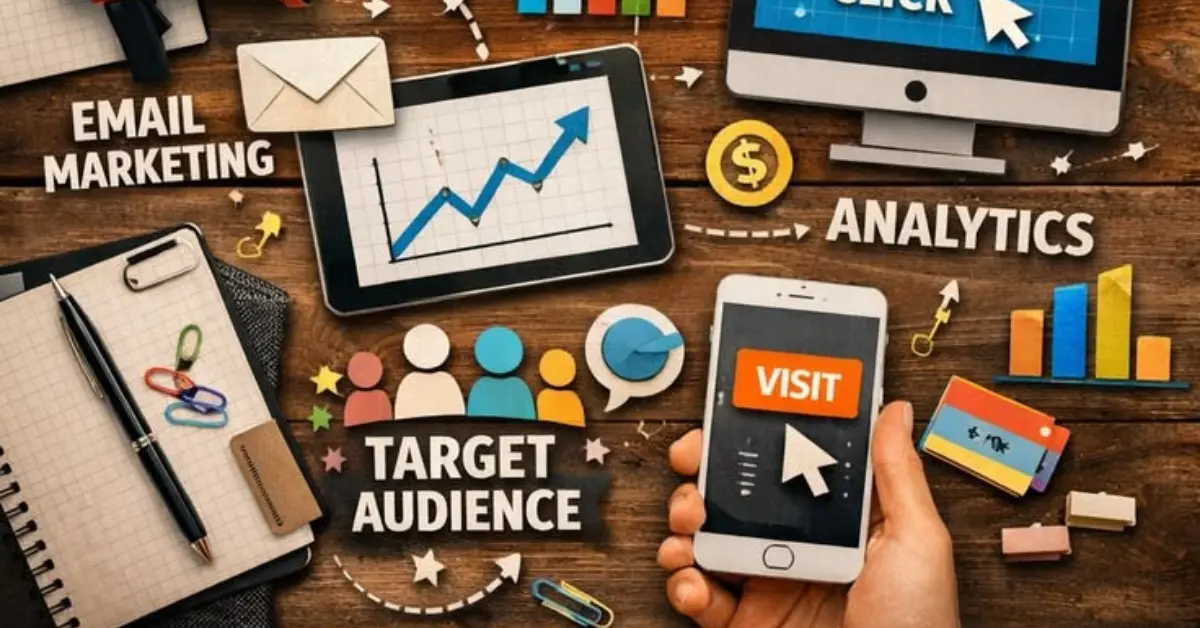
Digital marketing Analytical Guide has evolved significantly over the past decade. Earlier, marketers relied heavily on intuition, experience, and broad assumptions to run campaigns. However, with the rise of advanced analytics tools and real-time data tracking, the industry has shifted toward a more precise and measurable approach. Today, businesses no longer depend on guesswork; instead, they use data to understand customer behavior, campaign performance, and market trends more accurately.
In modern marketing, analytics plays a central role in decision-making. It helps businesses identify what works and what doesn’t, allowing them to optimize strategies for better results. This is where the concept of how to make data-driven marketing decisions becomes essential. By analyzing key performance indicators such as engagement, conversions, and ROI, marketers can make informed choices that directly impact growth. Ultimately, data-driven marketing leads to improved efficiency, better targeting, and higher return on investment (ROI) in marketing, helping businesses achieve sustainable success in a competitive digital landscape.
What is a Digital Marketing Analytical Guide?
A Digital Marketing Analytical Guide is a structured approach that helps marketers understand, measure, and optimize their marketing performance using data. It explains how different analytics methods, tools, and metrics work together to evaluate campaign success and improve decision-making. In simple terms, it is a roadmap for using data to guide every marketing action instead of relying on assumptions or guesswork.
Marketing analytics refers to the process of collecting and analyzing data from various digital channels such as websites, social media, email campaigns, and paid ads. The role of data in marketing strategy is extremely important because it reveals customer behavior, preferences, and engagement patterns. With this insight, businesses can create more targeted campaigns, improve user experience, and increase overall effectiveness. Without data, marketing efforts often lack direction and measurable outcomes.
The main difference between traditional and data-driven marketing lies in decision-making. Traditional marketing depends on experience, intuition, and broad audience assumptions, while data-driven marketing relies on real-time insights and performance metrics. A Digital Marketing Analytical Guide bridges this gap by helping marketers shift from guesswork to evidence-based strategies, ensuring better results, improved efficiency, and higher ROI.
How to Make Data-Driven Marketing Decisions
Making smart marketing choices requires a structured approach that is based on real data rather than assumptions. Understanding how to make data-driven marketing decisions starts with following a clear step-by-step process. First, businesses must define their goals, such as increasing traffic, improving conversions, or boosting sales. Once goals are set, the next step is identifying key performance indicators (KPIs) that will measure success accurately.
The second step involves collecting data from multiple sources. This includes website analytics, social media platforms, email campaigns, and paid advertising channels. Combining data from these sources gives a complete picture of customer behavior and campaign performance. After data collection, marketers must focus on interpreting insights correctly. This means analyzing patterns, identifying trends, and understanding what the numbers are actually indicating about audience preferences and actions.
Finally, one of the most important aspects of how to make data-driven marketing decisions is avoiding guesswork in campaigns. Instead of relying on assumptions, marketers should use real-time data to test, optimize, and refine their strategies. This ensures better accuracy, improved performance, and more efficient use of marketing budgets, ultimately leading to stronger results and higher ROI.
Key Marketing Metrics You Must Track
Engagement Rate Metrics
Engagement rate metrics are one of the most important indicators of how effectively your audience is interacting with your content. These metrics measure the level of attention, interest, and participation users show across your digital platforms. In simple terms, they help you understand whether your marketing efforts are truly connecting with your audience or not.
On social media, engagement includes actions such as likes, shares, comments, and saves. High engagement on these platforms indicates that your content is relevant and valuable to your audience. It also helps improve visibility, as most social media algorithms prioritize content with stronger interaction levels. Therefore, tracking engagement rate metrics on platforms like Facebook, Instagram, and LinkedIn is essential for improving reach and brand awareness.
On websites, engagement signals include time spent on page, pages per session, and bounce rate. These indicators show how users interact with your website content. A higher time on page usually means users find your content useful, while a high bounce rate may suggest the need for improvement. By analyzing both social media and website engagement together, marketers can better understand user behavior and optimize their strategies for stronger performance.
Conversion Rate Optimization (CRO) Analytics
Conversion rate optimization (CRO) analytics refers to the process of using data and performance insights to increase the percentage of users who take a desired action on a website or digital campaign. These actions can include making a purchase, signing up for a newsletter, filling out a form, or clicking a call-to-action button. In marketing, CRO focuses on turning existing traffic into valuable results instead of just increasing traffic volume.
Analytics plays a key role in improving conversions by revealing how users behave on a website or landing page. It shows where visitors drop off, which pages perform well, and what elements influence decision-making. By analyzing this data, marketers can identify weaknesses in the user journey and make targeted improvements that lead to higher conversion rates. This makes conversion rate optimization (CRO) analytics a powerful tool for improving overall marketing performance.
Two important techniques used in CRO are A/B testing and funnel analysis. A/B testing compares two versions of a webpage or element to see which one performs better, while funnel analysis tracks the steps users take before converting. Together, these methods help businesses optimize design, content, and user experience to maximize conversions and achieve better ROI.
Return on Investment (ROI) in Marketing
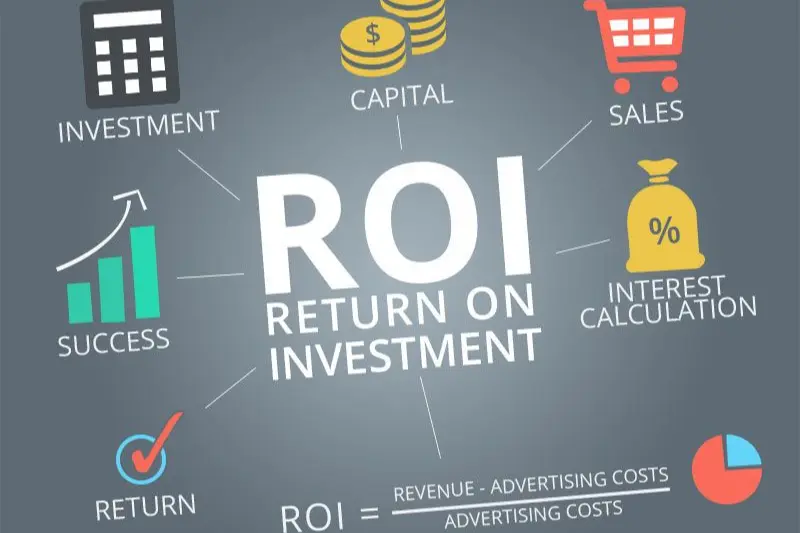
Return on investment (ROI) in marketing is a key metric used to measure the profitability of marketing efforts. It shows how much revenue a campaign generates compared to the amount spent on it. In simple terms, ROI helps marketers understand whether their strategies are delivering financial value or resulting in losses. It is one of the most important indicators for evaluating overall marketing success.
To calculate ROI, marketers typically use a simple formula: (Revenue – Marketing Cost) ÷ Marketing Cost × 100. This calculation provides a percentage that reflects the effectiveness of a campaign. A positive ROI means the campaign is profitable, while a negative ROI indicates that improvements are needed. Tracking return on investment (ROI) in marketing helps businesses allocate budgets more efficiently and focus on high-performing strategies.
ROI is considered the ultimate performance indicator because it directly connects marketing activities to business revenue. Unlike engagement or traffic metrics, ROI clearly shows financial impact. To optimize campaigns for better returns, marketers analyze performance data, refine targeting, improve ad creatives, and eliminate underperforming channels. By continuously optimizing based on ROI insights, businesses can maximize profits, reduce wasted spending, and achieve sustainable growth in competitive markets.
Best Tools for Marketing Analytics and Reporting
Choosing the best tools for marketing analytics and reporting is essential for understanding campaign performance and making smarter, data-driven decisions. These tools help marketers collect, analyze, and visualize data from multiple channels, making it easier to track progress and optimize strategies effectively.
There are several categories of tools that businesses commonly use. Web analytics tools such as Google Analytics help track website traffic, user behavior, and conversion patterns. Social media analytics tools provide insights into engagement, reach, and audience growth across platforms like Facebook, Instagram, and LinkedIn. CRM and automation tools, such as HubSpot or Salesforce, allow marketers to manage customer data, track leads, and automate marketing workflows for better efficiency.
In addition, reporting dashboards bring all data together in one place. These dashboards convert complex data into easy-to-understand visuals, helping teams quickly identify trends and performance gaps. Using the best tools for marketing analytics and reporting ensures that businesses can monitor performance in real time, improve decision-making, and create more effective marketing strategies that drive higher ROI and long-term growth.
You may also read this
👉 What Are Blog Tags and How to Use Them – Complete Guide (Bluleadz)
👉 Understanding Blog Categories and Tags – Harisundar Guide
👉 dbt Insights Blog Category – Analytics & Data Insights (dbt Labs)
👉 Top Data Analytics Blogs You Should Follow – CareerFoundry
👉Analytics Mania – Google Tag Manager & Google Analytics Blog
How Data Improves Marketing Strategy
Data plays a crucial role in shaping modern marketing strategies by helping businesses move from guesswork to precision-based decision-making. One of the most powerful uses of data is personalization using analytics. By analyzing customer behavior, preferences, and past interactions, marketers can deliver highly targeted content, product recommendations, and offers that feel more relevant to each user. This increases engagement and improves overall customer satisfaction.
Another important benefit is audience segmentation. Data allows businesses to divide their audience into specific groups based on demographics, interests, buying behavior, or location. This makes it easier to create tailored marketing campaigns for each segment instead of using a one-size-fits-all approach. As a result, campaigns become more effective and conversion rates improve significantly.
Data also helps in budget optimization by showing which channels and campaigns generate the highest returns. Marketers can shift spending away from underperforming areas and invest more in high-performing strategies, ensuring better efficiency. Additionally, predictive marketing trends use historical and real-time data to forecast future customer behavior. This helps businesses stay ahead of market changes and plan strategies proactively rather than reactively, leading to stronger long-term growth.
Common Mistakes in Marketing Analytics
Even with advanced tools and data access, many businesses still make critical errors that reduce the effectiveness of their marketing efforts. One of the most common mistakes is relying on vanity metrics. These include numbers like page views, likes, or followers that may look impressive but do not necessarily reflect real business performance such as conversions or revenue.
Another major issue is ignoring customer journey data. Many marketers focus only on final outcomes without understanding how users move through different stages before converting. This lack of insight can lead to incomplete strategies and missed opportunities for optimization across the funnel.
Misinterpreting analytics reports is also a frequent problem. Data can be misleading if not analyzed correctly, especially when context is missing or metrics are viewed in isolation. Without proper understanding, businesses may make wrong decisions that negatively impact performance. Lastly, not testing campaigns properly limits growth potential. A/B testing, experimentation, and continuous optimization are essential for improving results. Without testing, marketers rely on assumptions instead of evidence, which weakens overall strategy and reduces ROI.
Practical Example of Data-Driven Marketing Success
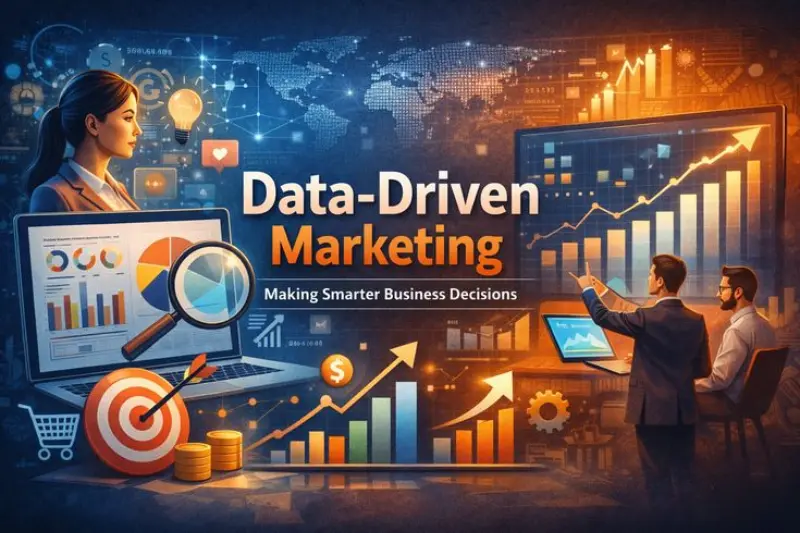
A simple example of data-driven marketing success can be seen in an online clothing store that struggled with low sales despite receiving good website traffic. Initially, the business was relying on general assumptions and was not tracking user behavior in detail. After implementing analytics tools and focusing on how to make data-driven marketing decisions, they began analyzing customer journeys, traffic sources, and drop-off points.
Before using analytics properly, the store had high traffic but a low conversion rate, meaning many visitors were leaving without making a purchase. They were also spending equally on all marketing channels without knowing which ones were actually performing well. However, after applying conversion rate optimization (CRO) analytics, they discovered that most users were abandoning the checkout page due to a complicated payment process.
After making improvements based on data insights, such as simplifying checkout steps and optimizing product pages, the results improved significantly. The conversion rate increased, and return on investment (ROI) in marketing also grew as ad spend was shifted toward high-performing channels. This data-driven approach not only boosted conversions but also made the overall marketing strategy more efficient and profitable.
Future of Data-Driven Marketing
The future of digital marketing is becoming increasingly intelligent, with data playing an even more central role in shaping strategies. One of the biggest transformations is the rise of AI in marketing analytics. Artificial intelligence can process massive amounts of data in seconds, identify patterns, and provide actionable insights that would be impossible to detect manually. This allows marketers to optimize campaigns faster and with greater accuracy.
Another major trend is predictive insights. Instead of only analyzing past performance, advanced analytics tools now forecast future customer behavior, market trends, and buying patterns. This helps businesses stay ahead of competition by planning campaigns proactively rather than reacting after results are seen. Predictive models also improve targeting, personalization, and budget allocation.
Real-time decision-making is also shaping the future of marketing. With live data dashboards and automated systems, marketers can instantly adjust campaigns based on performance. Whether it’s changing ad creatives, shifting budgets, or optimizing audience targeting, decisions can now be made in seconds. Together, these advancements are making data-driven marketing more powerful, efficient, and essential for long-term business success.
Conclusion
In today’s competitive digital landscape, marketing success depends heavily on understanding and using data effectively. Throughout this guide, we explored how a Digital Marketing Analytical Guide helps businesses move from guesswork to structured, evidence-based strategies. From tracking engagement rate metrics, applying conversion rate optimization (CRO) analytics, and measuring return on investment (ROI) in marketing, to using the best tools for marketing analytics and reporting, every element plays a critical role in improving performance.
The key takeaway is that analytics is no longer optional—it is essential. Businesses that consistently track and interpret data are better equipped to understand customer behavior, optimize campaigns, and make smarter strategic decisions. Ignoring analytics often leads to wasted budgets and missed opportunities, while data-driven approaches ensure continuous improvement.
Ultimately, data-driven marketing leads to higher efficiency, stronger customer targeting, and significantly better ROI. By learning how to make data-driven marketing decisions, businesses can transform raw data into actionable insights and achieve sustainable growth in an increasingly data-focused world.
FAQs – Digital Marketing Analytical Guide
1. What is a Digital Marketing Analytical Guide?
A Digital Marketing Analytical Guide is a structured approach that helps marketers use data, metrics, and tools to analyze performance and make better marketing decisions.
2. Why is data important in digital marketing?
Data helps marketers understand customer behavior, measure campaign success, and improve strategies for better results and higher ROI.
3. How to make data-driven marketing decisions?
To make data-driven marketing decisions, you need to collect data, analyze performance metrics, identify patterns, and optimize campaigns based on real insights instead of assumptions.
4. What are engagement rate metrics?
Engagement rate metrics measure how users interact with your content, such as likes, shares, comments, time spent on a page, and bounce rate.
5. What is conversion rate optimization (CRO) analytics?
Conversion rate optimization (CRO) analytics is the process of using data to improve the percentage of users who complete desired actions like purchases or sign-ups.
6. How do you calculate ROI in marketing?
ROI is calculated using the formula: (Revenue – Marketing Cost) ÷ Marketing Cost × 100. It shows how profitable your marketing campaigns are.
7. What are the best tools for marketing analytics and reporting?
Popular tools include Google Analytics, social media analytics tools, CRM systems like HubSpot or Salesforce, and reporting dashboards like Data Studio or Power BI.
8. What is the difference between traditional and data-driven marketing?
Traditional marketing relies on experience and assumptions, while data-driven marketing uses real-time analytics and performance data for decision-making.
9. What are common mistakes in marketing analytics?
Common mistakes include relying on vanity metrics, ignoring customer journey data, misinterpreting reports, and not testing campaigns properly.
10. What is the future of data-driven marketing?
The future includes AI-powered analytics, predictive insights, and real-time decision-making, making marketing more accurate, fast, and efficient.
