


Introduction
Modern data insights refer to the advanced way organizations collect, analyze, and use data to make smarter decisions. Unlike traditional methods, modern approaches rely heavily on real-time information, automation, and advanced analytics to uncover patterns and trends that were previously difficult to detect. These insights help businesses understand customer behavior, market shifts, and operational performance more accurately and efficiently.
Businesses now rely on data more than ever because competition is increasing and decisions need to be fast, accurate, and evidence based. Instead of guessing, companies use data-driven strategies to improve marketing, sales, and customer experience. The growing importance of data-driven decision-making has made insights a core part of every successful organization.
Technology plays a major role in transforming raw data into meaningful insights. Tools like AI, machine learning, and cloud computing process large volumes of data and convert it into useful information. This transformation is the foundation of modern data insights, enabling businesses to grow and stay competitive in a rapidly changing environment.
What Are Modern Data Insights?
Modern data insights are the advanced understanding and meaningful conclusions generated from large and complex datasets using modern technologies like AI, automation, and analytics tools. In simple terms, they help businesses turn raw data into clear, actionable information that supports faster and smarter decision-making.
The main difference between traditional and modern data analysis is speed, accuracy, and scale. Traditional analysis was mostly manual, time-consuming, and limited to small datasets, often relying on basic spreadsheets and human interpretation. In contrast, modern data analysis uses advanced systems that can process massive amounts of data in real time, providing deeper and more accurate insights.
The rise of AI and automation has significantly improved the quality of insights. AI can quickly identify hidden patterns, trends, and anomalies that humans might miss, while automation reduces manual effort and errors. These technologies ensure more reliable and consistent results, making modern data insights a powerful tool for businesses to predict outcomes, optimize performance, and stay competitive in today’s data-driven world.
Data Visualization Tools in Modern Analytics
Data visualization tools play a crucial role in turning complex datasets into clear and understandable visual formats. In modern analytics, these tools help businesses and analysts quickly interpret large volumes of information without going through raw numbers. Visual representation makes it easier to identify patterns, trends, and outliers, which improves the speed and quality of decision-making.
Common examples of data visualization include dashboards, charts, graphs, and heatmaps. Dashboards provide a complete overview of key metrics in one place, while charts and graphs simplify comparisons between data points. Heatmaps help highlight areas of high and low activity, making it easier to spot important trends at a glance.
Popular tools like Power BI, Tableau, and Google Data Studio are widely used in businesses today. These platforms allow users to create interactive reports and real-time dashboards that update automatically. They also help integrate data from multiple sources, making analysis more efficient and centralized.
Visualization makes insights easier to understand because humans process images faster than raw numbers. By converting data into visual formats, data visualization tools help users grasp complex information quickly, leading to better and more informed decisions in modern data-driven environments.
Business Intelligence Solutions for Companies
Business intelligence solutions refer to technologies, systems, and practices that help organizations collect, analyze, and present business data in a meaningful way. These solutions transform raw data into reports, dashboards, and insights that support better decision-making and strategic planning. In simple terms, BI solutions help companies understand what is happening in their business and why it is happening.
Businesses use BI systems mainly for reporting and decision-making. These systems gather data from different departments such as sales, marketing, finance, and operations, then organize it into easy-to-read reports. Managers and decision-makers use this information to identify trends, track progress, and make informed choices that improve overall performance.
The key benefits ofbusiness intelligence solutions include real-time tracking, which allows companies to monitor activities instantly;performance monitoring, which helps measure business success against goals; and strategy building, which supports long-term planning based on accurate data. These advantages make BI systems essential for modern organizations.
In today’s competitive environment, BI plays a critical role in modern organizations by improving efficiency, reducing risks, and enabling data-driven decision-making that leads to sustainable growth.
Predictive Analytics and Future Planning

Predictive analytics is a data analysis technique that uses historical data, statistical algorithms, and machine learning models to predict future outcomes. In simple terms, it helps businesses understand what is likely to happen next based on past patterns and trends. Instead of only analyzing what has already occurred, predictive analytics focuses on forecasting future possibilities.
It works by studying large sets of historical data and identifying hidden patterns or relationships. These patterns are then used to build models that can estimate future behavior, such as customer purchases, market demand, or financial performance. This makes it a powerful tool for planning and decision-making in uncertain environments.
The applications of predictive analytics are widely used across industries. In sales and marketing, it helps forecast customer demand and improve targeting strategies. In finance, it is used for credit scoring, fraud detection, and risk assessment. In healthcare, it assists in predicting patient outcomes and disease risks. These real-world applications show how versatile and valuable this technique is.
The importance of predictive analytics lies in its ability to reduce risks and improve accuracy. By anticipating future trends, businesses can make smarter decisions, avoid potential losses, and optimize their strategies for better results.
Data Mining Techniques Used in Modern Systems
Data mining techniques refer to the process of extracting useful patterns, relationships, and insights from large and complex datasets. In simple terms, data mining helps businesses discover hidden information that is not easily visible in raw data. It combines statistics, machine learning, and database systems to turn massive amounts of data into meaningful knowledge.
There are several common data mining techniques used in modern systems. Clustering groups similar data points together, helping businesses identify customer segments. Classification assigns data into predefined categories, such as spam vs. non-spam emails. Association rules discover relationships between different variables, like products frequently bought together. Anomaly detection identifies unusual patterns, which is useful for fraud detection and system monitoring.
Businesses use these techniques to extract hidden patterns from large datasets that would be impossible to analyze manually. By processing customer transactions, website activity, and purchase history, companies can uncover valuable insights that improve decision-making and strategy development.
A major role of data mining techniques is in customer behavior analysis. It helps businesses understand preferences, buying habits, and trends, allowing them to create personalized marketing strategies and improve customer satisfaction. This makes data mining a key component of modern data-driven systems.
You Might Also Enjoy Reading:
- ThoughtSpot – Data Insights & Analytics
- Coursera – Marketing Analytics
- Paperflite – Content Tracking Insights
- Improvado – Instagram Analytics Dashboard
Data Interpretation Methods for Better Insights
Data interpretation methods refer to the different approaches used to analyze and make sense of raw data in order to extract meaningful insights. In simple terms, data interpretation means understanding what the collected data is actually telling us. It is the final step where raw numbers, facts, and figures are converted into useful information that supports decision-making and problem-solving.
There are several common data interpretation methods used in modern analytics. Qualitative analysis focuses on non-numerical data such as opinions, feedback, and behavior patterns. Quantitative analysis deals with numerical data and uses mathematical calculations to identify trends and relationships. Statistical modeling goes a step further by using formulas and algorithms to predict outcomes and analyze complex datasets in a structured way.
These methods help transform raw data into actionable insights by identifying patterns, trends, and correlations that can guide business strategies. Without proper interpretation, data remains meaningless and cannot support effective decision-making. When applied correctly, these methods turn complex information into clear and useful conclusions.
The importance of accuracy in decision-making cannot be ignored. Even small errors in interpretation can lead to wrong strategies and financial losses. That is why reliable data interpretation methods are essential for ensuring correct, data-driven decisions in modern business environments.
How Modern Data Insights Transform Businesses
Modern data insights have become a powerful driver of change in today’s business environment, enabling organizations to move from guesswork to fully data-driven strategies. One of the biggest impacts is improved decision-making, where companies rely on accurate data analysis instead of assumptions. This leads to smarter choices in areas like marketing, product development, and financial planning.
Another major transformation is better customer understanding. By analyzing customer behavior, preferences, and feedback, businesses can create personalized experiences that increase satisfaction and loyalty. This deeper understanding allows companies to build stronger relationships with their target audience.
Modern data insights also contribute to increased efficiency and productivity by identifying operational bottlenecks and optimizing workflows. Businesses can reduce waste, save time, and allocate resources more effectively, leading to smoother operations and higher output.
In addition, data-driven organizations gain a strong competitive advantage in the market. They can quickly adapt to changing trends, predict customer needs, and stay ahead of competitors who rely on traditional methods.
Finally, the role of automation and AI in transformation is extremely important. Artificial intelligence and automated systems process large datasets quickly, detect patterns, and generate real-time insights. This not only speeds up decision-making but also improves accuracy, making modern data insights essential for business growth and innovation.
Challenges in Modern Data Insights
Even though modern data insights have transformed the way businesses operate, there are still several challenges that can affect the accuracy and effectiveness of decision-making. One of the most common issues is data quality issues, where incomplete, outdated, or incorrect data leads to unreliable results. Poor-quality data can misguide businesses and result in wrong strategies.
Another major challenge is the skill gap in data analysis. Many organizations struggle to find professionals who have the technical knowledge to properly analyze and interpret complex datasets. Without skilled analysts, even advanced tools cannot deliver meaningful insights.
Privacy and security concerns are also critical, as businesses handle large amounts of sensitive customer data. Ensuring data protection and compliance with regulations is essential to maintain trust and avoid legal issues.
In addition, over-dependence on tools can be risky. While automation and analytics platforms are powerful, relying too heavily on them without human understanding can lead to shallow or incorrect interpretations.
Finally, the complexity of big data systems makes it difficult for organizations to manage and process massive datasets efficiently. Integrating multiple data sources and maintaining system performance requires advanced infrastructure and expertise. These challenges must be addressed to fully unlock the value of modern data insights.
Future of Modern Data Insights
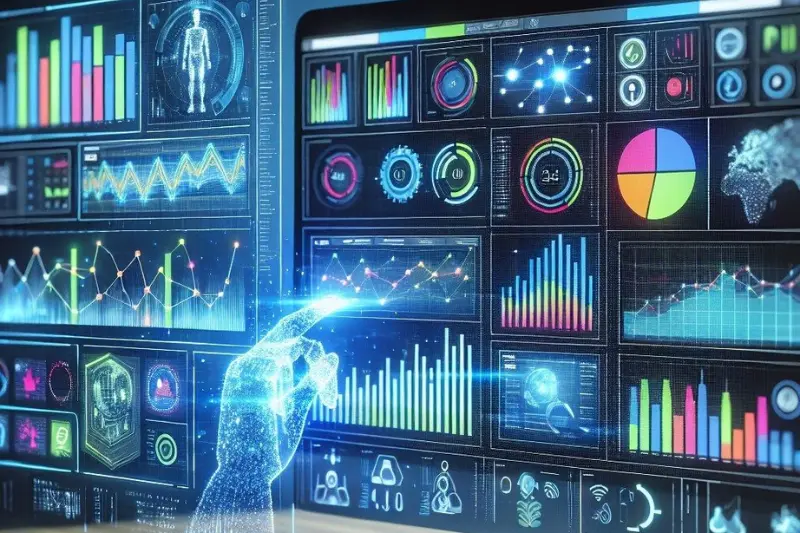
The future of modern data insights is becoming increasingly advanced as technology continues to evolve at a rapid pace. One of the biggest trends is the growth of AI-powered analytics, where artificial intelligence systems automatically analyze large datasets, detect patterns, and generate insights with minimal human effort. This makes decision-making faster, smarter, and more accurate.
Another major development is real-time data processing, which allows businesses to analyze information instantly as it is generated. This helps organizations respond quickly to market changes, customer behavior, and operational issues without delays, improving overall efficiency and competitiveness.
Automation in decision-making is also shaping the future of data insights. Automated systems can now make routine business decisions based on predefined rules and data models, reducing human workload and minimizing errors. This leads to faster and more consistent outcomes.
At the same time, smarter business intelligence systems are being developed that integrate multiple data sources and provide deeper, more interactive insights. These systems are becoming more user-friendly and accessible across all business levels.
Finally, the evolution of predictive technologies is enhancing the ability to forecast future trends with greater accuracy. As a result, modern data insights will continue to play a key role in driving innovation, efficiency, and strategic growth in the future.
Conclusion
Modern data insights have become a vital part of today’s digital economy, helping businesses turn complex and massive datasets into clear, meaningful, and actionable information. They allow organizations to understand customer behavior, market trends, and operational performance in a much more accurate and efficient way. As a result, data has shifted from being a simple resource to becoming a key driver of business success.
With the help of advanced tools and techniques such as data visualization tools, business intelligence solutions, predictive analytics, data mining techniques, and data interpretation methods, companies can make faster and more informed decisions. These technologies not only simplify data analysis but also improve accuracy, reduce risks, and enhance strategic planning across all levels of an organization.
Ultimately, the main takeaway is clear: data-driven businesses lead the future. Organizations that effectively use modern data insights are better equipped to innovate, adapt to change, and stay ahead of their competitors in an increasingly data-focused world.
FAQs on Modern Data Insights
What are modern data insights?
Modern data insights are meaningful conclusions extracted from large and complex datasets using advanced tools like AI, analytics, and automation to support better decision-making.
Why are modern data insights important?
They are important because they help businesses make faster, smarter, and more accurate decisions, improve performance, and understand customer behavior effectively.
What are data visualization tools?
Data visualization tools are software like charts, graphs, dashboards, and heatmaps that convert complex data into visual formats for easier understanding.
What are business intelligence solutions?
Business intelligence solutions are systems that collect, analyze, and present business data to help companies make strategic and data-driven decisions.
What is predictive analytics?
Predictive analytics uses historical data, AI, and statistical models to forecast future trends, customer behavior, and business outcomes.
What are data mining techniques?
Data mining techniques are methods used to extract hidden patterns from large datasets, such as clustering, classification, association rules, and anomaly detection.
What are data interpretation methods?
Data interpretation methods include qualitative analysis, quantitative analysis, and statistical modeling used to convert raw data into meaningful insights.
How do companies use modern data insights?
Companies use them for marketing, customer analysis, product development, fraud detection, supply chain management, and forecasting future trends.
What is the difference between traditional and modern data analysis?
Traditional analysis is manual and slow, while modern analysis uses AI, automation, and real-time systems to process large data quickly and accurately.
What is the future of modern data insights?
The future includes AI-powered analytics, real-time data processing, automated decision-making, and advanced predictive technologies that will make businesses smarter and more efficient.
